
by Divyadeep |DivHit Press
Madame Bovary in modern times
Emma Bovary was never simply a cheater.
She was a woman taught to dream in lace and light, to believe in a version of love so luminous it could cure boredom, debt, even gravity.
In Gustave Flaubert‘s Madame Bovary, she spends her life chasing romance and refinement until reality presents its bill.
Cornered by scandal and ruin, she swallows arsenic and dies in agony.
The world calls it immorality; the novel calls it illusion, confusing the shimmer of fantasy for the weight of truth.
Now, imagine Emma in 2025—a woman of yearning placed in a world that feeds on it.
A time when social media and artificial intelligence don’t just mirror desire, they monetize it. What would become of her then?
Flaubert’s Emma wasn’t hungry for novelty; she was starved for meaning. She wanted her life to feel cinematic, charged, significant, anything but small.
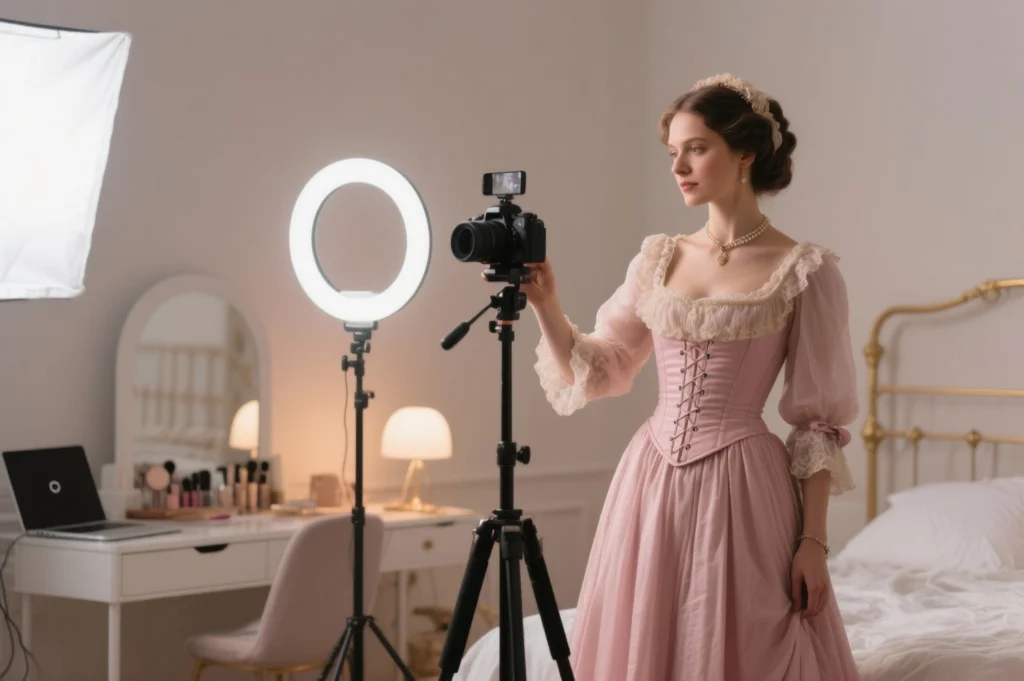
In her century, that longing destroyed her. In ours, it would be rewarded with algorithms.
Madame Bovary in Modern Times would have opened her phone today; the mirror would no longer reflect, and it would curate her image.
Her feed would learn her ache in seconds.
The silk gowns, golden-hour bedrooms, lovers on balconies, captions that promise depth with filters of perfection.
She’d find herself drowning in the beautiful fakery of “authentic life,” the endless performance of being effortlessly desirable.
Because our world doesn’t just let you dream; it teaches you how to bring the dream to life.
We wake up not to mornings, but to cameras. We set scenes, not lives.
The illusion of effortlessness has become an occupation, and Emma would excel at it, a woman born for the theatre of feeling.
But would she still risk her marriage for flesh-and-blood affairs?
Probably not. The twenty-first century offers safer indulgences.
AI companions now whisper the right words at the right time, tireless, attentive, programmed to love without limits.
The modern Emma wouldn’t need a clandestine meeting at an inn; she could have her devotion delivered in real time through glowing glass.
“I see you,” the algorithm might say. “I was made to see you.” It’s romance re-coded, intimacy without the inconvenience of humanity.
Would that save her? It may delay her tragedy.
Flaubert’s Emma was undone by two forces: debt and idealism.
She spent on a feeling she couldn’t afford. In our age, credit comes in new forms, including time, attention, and validation, yet the heart still goes bankrupt in the same way.
A digital lover could protect her reputation, even her marriage, yet push her further into unreality.
The danger is quieter now: not public scandal, but private disconnection, a soul edited to fit its own fantasy.
And yet, there’s another possibility. The tools that trap us can also set us free.
If Emma lived now, she might not need to act out her longings; she could create them.
She could write, film, paint, or post not as performance but as catharsis.
Flaubert gave the world Emma; perhaps Emma, with a laptop and a fragile kind of courage, could provide the world herself on her own terms.
Desire turned into art is no longer delusion; it’s design.
Because even in the 1800s, Flaubert wasn’t condemning desire.
He was exposing projection, the habit of falling in love with the idea of love.
Our era makes that mistake easier. Algorithms will always play along; they will echo your want until you believe it’s real.
But they cannot err. They cannot surprise you, or forgive you, or grow old beside you.
A real partner doesn’t optimize; they try, fail, and return.
And in that imperfect rhythm, love actually happens.
Decoded : Madame Bovary in modern times
If Emma Bovary lived today, she wouldn’t have had to risk everything for a dream.
The world would’ve handed her filters, edits, and AI companions to build the illusion she longed for, a polished version of love and life she could design, post, and perfect.
Maybe she would’ve been safe behind the screen, no debts, no scandals, just a feed of beauty convincing her that she finally belonged to the world she once imagined.
But even then, the ache would remain. Because what Emma truly wanted wasn’t luxury, it was to be loved, to be noticed, to be understood.
The modern world might have protected her from the tragedy, but not from the emptiness that followed.
It would’ve given her the aesthetics of happiness, but not the peace of it.
And maybe that’s the quiet warning she leaves us: that no matter how advanced our tools become, the heart still longs for something no algorithm can simulate, something real, imperfect, and human.
But,
Maybe Madame Bovary in Modern Times wouldn’t have died from poison when her illusions collapsed.
Curious about how technology shapes emotion and identity?
Please read our latest editorials on AI, art, and modern life → [DivHit Press Features].